A little town with a lot of heart

Storytelling

IMG_0277_2_3 copy

This article was originally published in The Essay Magazine in October, 2013. The magazine is unfortunately no longer in service.

As kids, brothers and sisters are always joining in on new adventures together — whether it be something as simple as setting up a lemonade stand at the end of the driveway or something as daring as taking on dragons in the backyard to defend the castle. New adventures are what we thrive on as children, and as the years pass and we begin to settle into our old age, we reminisce about the good old days and the dragons we once fought.

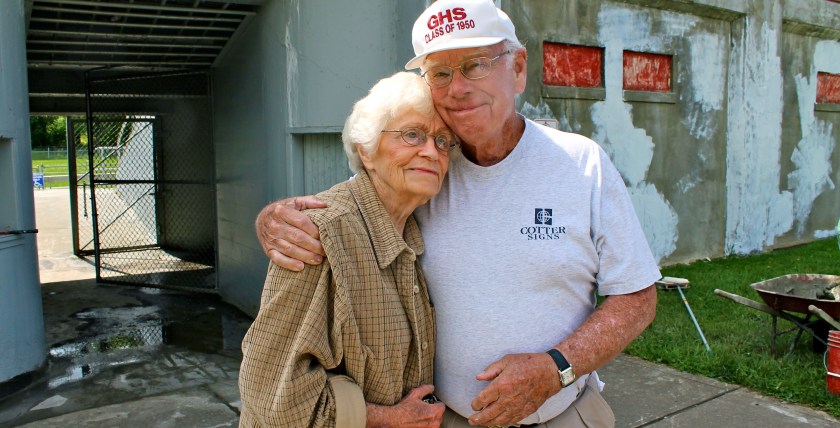
This is not exactly the case for Jim Cotter and Jody Moore. Rather than spending their retired years remembering the exciting adventures that have come and gone, now in their 80s this pair of siblings has just embarked on their greatest adventure yet: raising a town up from the dead.

Raised in the town of Glouster, Ohio, Jim and Jody grew up in what they described as the best of times. “Our little town was vibrant and had everything that a person could need,” said Jim. “Gee, I guess we had 16 or 18 neighborhood grocery stores, the coalmines were booming, and we just had everything we needed here: bowling allies, movie theaters, soda fountains, and all those things that you like as kids, you know?”

Due to the lack of industry in the town and the increasing number of high school and college graduates searching for jobs, it was only a matter of time before the population began to dwindle as people migrated to bigger cities to look for work. As stores began to go out of business, the rest of the town began to fall apart. In a place once bursting with life, abandoned buildings and dirty storefront windows became the norm.

After completing his freshman year at nearby Ohio University, Jim received a call from a friend asking him to come out to Dayton to help with his new, “booming” business. Jim told him, “if you can tell me where it’s at on a map, I’ll try to find it and come up and help you for a few weeks.” A few weeks turned into a few months, which quickly turned into 60 years. Jim stayed in Dayton, raised his family there, and started his own sign and advertising business. However, after the passing of his wife last year, he found himself with some time to come and visit his sister Jody, who remained in Glouster all her life and raised her family there.

During his previous visit, Jim was haunted by the harsh reality that his beloved hometown had been transformed into a ghost town, and he wouldn’t stand for it any longer. He contacted the mayor and asked him what could be done to help improve the town. He began making any small enhancements he could, first by painting old fire hydrants and then painting a clear, protective coat over the town mural to make sure it was preserved for future generations to see.

While visiting his sister this time around, Jim had some even bigger changes in mind for Glouster. After a town meeting held at the high school two months ago, where a fellow neighbor asked the question, “Can’t we do something about making our little town look nicer?”, the wheels in Jim’s mind began turning.

He then asked his sister what she would like to see happen if she had her wishes about the town. “I just wish someone would go down through town and wash all those dirty old windows in those empty buildings,” Jody told him. “And I said, okay, well why don’t you grab a squidgy and something that we can clean with and you and I will go do that,” was Jim’s reply. “And we went downtown and did it.”

From there Jim and Jody decided they would go through town and start painting some of the houses and buildings that needed perking up. “That way when people come through town, like yourself, they don’t see it as some trashy little hole in the wall,” said Jim. “They see it as a nice, suburban little town where you might want to stop, you know, do a little shopping or what have you, and spend some time.”

Their original goal was to do 12 houses, the football stadium, the parks, and to cover some of the storefronts along the main street. They have now exceeded that goal, with 24 or 25 houses painted so far, and are still going strong.

A new adventure had begun — a new dragon for them to defeat — only this time it would take more than two soldiers; it would take an army. Volunteers began flooding in from the community, neighboring towns, and across state lines that had heard about the project and wanted to contribute. Jim received phone calls from people as far as Connecticut who said they were hoping to come down and help wherever need be. “It’s been fun,” Jim said. “I don’t think anybody regrets the hours they’ve spent or the work they’ve put in.” The houses that Jim and his team have chosen to work on first are ones belonging to community members who are unable to do it themselves. Whether they are sick, have physical disabilities, or financial problems, the guidelines for the project have been that those in need would get it first. This vision of revival has spread like wildfire throughout the town. Many members of the community have jumped on board and have been seen painting their own homes and sometimes even their neighbors’ houses. “You see people who are power-washing their houses, and just all over the community it seems like there are people who are doing things and getting more pride in how things look. It’s very rewarding,” said Jody.

She is not the only one who’s noticed the rewarding effects of this project. After only a short period of time, members of the town have not only seen the changes taking place, but have also felt them. “Growing up in Glouster, it was disheartening to see the main street, where all of the businesses are supposed to be in typical towns, run-down with windows that had dust-graffiti on them,” said Megan Exline, born and raised in Glouster and now a student at Ohio University. “I think it will give our town a good morale boost, especially to the people who drive or walk through it every day.”

Jim hopes that in the future some of the younger members of the community will take on the project and keep it going. “My sister is 83 and I’m 81, so our time is limited,” he said. “But someone else will pick it up. We have a lot of good volunteers and they’re enjoying what they’re doing and as long as it remains fun, it’ll keep going.”

The external transformation that the town has undergone can be plainly seen just by driving through its streets. However, the most important transformations that the town has undergone are the ones that are not so obvious — like the sense of pride that has been instilled in the community, and the sense of gratification felt by town residents and volunteers who are working to make a difference. Throughout this experience, Jim and Jody themselves have discovered that the biggest rewards sometimes come in the smallest packages. The image that will forever stick in their minds is that of a little girl whose house they worked on. “We did their house for them — the front and the porch. We painted the porch a bright yellow, and the floor of the porch is sort of a nice blue-gray color,” explained Jim. “Then we put some shutters up on the front windows and a flowerbox down at the bottom and some phony flowers in it.”

As his throat began to tighten and his voice began to break up, he turned to his sister to help him finish the story. Through equally tear-filled eyes, Jody said, “And when the little girl got home from school she said, ‘I have the prettiest house in town.’”

Jim took off his glasses and brought one of his paint-splattered fingertips to the corner of his eye as he wiped away a few stray tears. “So that’s pretty nice,” he sighed. “That’s the thanks you get, and that’s what it’s all about.”
When a life-long dream becomes a post-retirement reality

Storytelling

This article was originally published in The Essay Magazine in October, 2012. The magazine is unfortunately no longer in service.

On this chilly October morning, like many other mornings, Jim Galvin reaches over and silences his screeching alarm clock. He somberly rolls out of bed and fumbles down the stairs. He then slides on his boots and creaks open the screen door to step out into the crisp autumn air.

As Galvin crosses the yard he peers out into the many acres of beautiful countryside where he and his wife have decided to spend their post-retirement years, relaxing and enjoying each other’s company. As he continues to walk, he stops and reaches down to pet his cat. He strokes his soft fur and scratches under his chin until the cat begins to nuzzle his hand, making sounds of affection and adoration. Galvin kneels down and puts his face up to the cage as the cat gently licks his cheek. He returns the favor by kissing him on the nose.

So why is this man, who clearly adores his cat, keeping him in a cage? Why would a retired veterinarian, with nothing but the highest respect for animals, keep his pet behind a grid of metal wiring instead of letting him roam free? As Galvin leans in and kisses his cat Dudley on the nose once again, he stares deep into his amber eyes and knows, no matter how loving this animal is, in the farm land of New Marshfield, Ohio, it is never safe to let a 400 pound tiger roam free.

Galvin’s fascination with tigers began when he was just a child growing up in Toledo, Ohio. In first and second grade his class took a field trip to the Toledo zoo. Walking through the paved streets past all the exhibits, with a symphony of animal calls filling the air, he found himself in front of a tall, three-story stone building. Upon entering the building, or as Galvin called it, the echo chamber, his stare caught that of the Siberian tiger who was peering back at him through the metal framework of his cage. With monkeys shouting on both sides of the cage, the level of noise was almost unbearable for Galvin, giving the young boy a migraine within moments. “And I looked at that tiger lying there and it hit me. I looked in his eyes and I thought—you’ve heard the expression ‘dead man walking?’ Well, that’s what that tiger looked like. He just looked like he’d prefer to be dead than listening to all that all day,” Galvin recalled. “And I just felt so bad, and it just kind of hit me. And I’ve had a passion for them ever since.”

After a long and successful career as a veterinarian in the Toledo area, Galvin decided it was time to hang up his hat and start a new chapter of his life. “I didn’t know what I was gonna do when I retired,” he said. “I’m not one of these people that could sit and play golf every day, I’d be bored out of my gourd.”

In a chance conversation with a zoo vet about six or seven years ago, Galvin expressed his regret about never getting into zoo medicine and working with big cats. In order to work as a vet for exotic animals, Galvin would have had to intern at a zoo for about two to four years. However, the vet informed him that he didn’t have to go into zoo medicine to work with big cats because there is no difference between them and the house cats he had been working with for years. The wheels in Galvin’s mind began turning.

After moving out to New Marshfield, just a few miles outside of Athens, Ohio where his wife Becky grew up, Galvin began to transform his garage into a safe, spacious pen for a tiger. In September of 2009, after putting much time and effort into preparing a space for his future animals, Governor Ted Strickland of Ohio began talk of putting an executive ban on all exotic animals. Galvin, in a panic, picked up the phone and called his friend Psy who lives in the area and, because of his similar passion for exotic animals, had built up a network with other big cat owners. “I thought, ‘my God, I won’t even get grandfathered because I don’t have one sitting here!’” Galvin said. He then did something he swore he’d never do, and has not done since—he purchased a tiger. “He’s the only one I’ve bought and he’ll be the only one I’ll buy. I won’t buy, sell, breed, trade or anything else at this point,” he explained. Galvin’s facility is simply the equivalent of a rescue shelter for dogs, where he takes in tigers who have been injured or whose owners can no longer take care of them.

After three years of transforming his back yard into an enclosure, Galvin has acquired three more tigers: Dudley, the big boy weighing almost 400 pounds, Louise, his only girl, or as Galvin calls her, his “sweetheart”, and Grumpy, the youngest, who at one year old weighs 185 pounds and is expected to grow as big as Dudley. Familiar with the community of tiger owners, Psy had heard that each of these cats was in a situation where their owners could no longer provide proper care for them and knew just the guy to send them to.

Upon receiving the tigers, Galvin faced many frustrations. In fear that their animals may be taken away from them, especially with law enforcement cracking down on regulations after the incident in Zanesville last winter, big cat owners tend to be very secretive. This left Galvin with little to no history on the tigers he received, besides that Boomer (his first tiger) and Louise had came from Northern Ohio, Dudley was flown in from somewhere in the Midwest, and Grumpy was from the Carolinas.

The second tiger he received, Dudley, who was four months old at the time, had diarrhea so bad that Galvin didn’t think he was going to make it. “He just laid there like a limp dish rag,” said Galvin. Without knowledge of Dudley’s former living situation, his previous diet, or his medical background, Galvin faced some challenges when figuring out how to treat this cat. “It took me about two weeks to straighten him around,” he said. “I would sit in his travel cage and talk to him and he’d just cry; he didn’t feel good.”

Each tiger has his own pen ranging in size from 16 x 16 ft. to 20 x 20 ft., depending

on the size of the tiger. He has also built two large exercise areas for the cats, one 40 x 70 ft. and one 50 x 100 ft., which gives them a lot of room to roam. “I love to watch them run out there in the play area,” said Galvin.

With each pen costing anywhere from $15,000 to $20,000 in materials and labor, and paying for them all with his own money and retirement funds, Galvin has now hit a financial roadblock. Already having had to turn away 11 tigers, he is quickly looking for ways to raise the funds he needs to add in more cages. Galvin has been fortunate enough to have local college students volunteer to come out on the weekends and help him put in more cages.

“Maybe they only spend an hour or two, but I told them, ‘every hour you guys spend here is one less thing I have to do’,” Galvin said about the volunteers. “So it allows me to get more done. Any little bit helps.”

One volunteer, Brenden Robinson, who helped to lay down gravel in the tiger cages, was stunned to see the tiger’s reaction to Galvin. “You could just tell when he walked up, the tigers just knew. He put his hand in there and he just let them play with his hand,” Robinson said. “They let him pet them all the time. They just—they act like it’s their dad and they just love him.”

More than showing the cats love and affection, Galvin also focuses heavily on safety and high security when it comes to these animals. With multiple layers of fences and cages, barbed wire lining the tops of the cages, and three padlocks with three separate keys, which Galvin keeps possession of on a key ring, there is no chance of these tigers getting out or anyone getting in without his knowledge. “We never really felt in danger at all,” Robinson said. “The set up that he has there is really sweet. It’s not just a tiny little cage or anything like that.”

After the Zanesville incident, current Ohio Governor John Kasich signed a bill that banned new ownership of certain exotic animals and also required current owners to register their animals with the state.

The incident has had a negative impact on Galvin’s future plans and his progress. Shortly after the Zanesville incident, Athens’ Sheriff Patrick Kelly was quoted in the paper voicing his concern about Galvin housing exotic animals. “I thought, ‘oh boy’,” said Galvin. “So I invited him out and once he saw the security fencing and what I’m doing, he said, ‘actually I understand what you’re doing, doctor, and I think this is fine.’ He actually brought his granddaughters out last time he came out.”

But even with the sheriff in his corner, the new laws have definitely put a damper on the plans that Galvin had for his property. He had envisioned an 80-acre animal sanctuary with 20 pens, each an acre big (larger than any zoo’s in the country), allowing him to house up to 40 cats. He had hoped to establish a sanctuary that he would later sell to the zoo. “I’m not going to live forever and obviously my wife and my children aren’t gonna want to have to deal with a bunch of cats,” Galvin said. But

with the new law he will not qualify and will have to settle for being a small rescue center that houses a maximum of six to eight cats. “A lot of things changed with Zanesville,” he said. “I had big ideas.”

Galvin now plans to do some fundraising to build a few more enclosures so he can take in more tigers that are in need of a home. But until then he will have to settle for his four tigers, his geese, and his two goats, all of which run to see him as soon as they hear his footsteps. Galvin’s animals are drawn to him like a magnet in a way that could only be described as “the Doctor Dolittle effect”.

As he crosses the yard on this crisp autumn morning, the sound of tigers chuffing in the distance, a retired man counts his blessings and hopes for the day when his visions will become realities.

On travel, life & faith.

Blogging, Storytelling

IMG_9321 copy

In the year between graduating college and starting my marketing career at Elliance, I spent 11 months traveling and serving as a missionary overseas with an organization called The World Race. On this journey, I lived in 11 countries throughout South America, Southeast Asia, and Africa. There I encountered the most breathtaking people, places and cultures I have ever known. In that time I continued writing, keeping an online journal of my experience and sharing stories of the people I met and lessons I learned over the course of the year.

These were by no means written in a professional format — most were composed in the late hours of the night, sitting on dirty bus station floors, or between english lessons in muggy classrooms, listening to the sound of children playing outside.

They are personal accounts of lessons learned on the outskirts of my comfort zone. The honest, unfiltered words of a girl waking up to the realities of the world and finding growth in unexpected places.

A few of my favorite blog posts:

Do You Want to Get Well? (1,916 views)

Amazing Grace (17,326 views)

A Changing of Seasons (790 views)

True Freedom Has No Conditions (1,057 views)

Falling in Love 30 Times in 30 Days (850 views)

Gifts From Ring (902 views)

Dodgeball and Dress Shoes (740 views)

Musings on the digital marketing world

Blogging, Storytelling

Leads_Mapping_Diagram-1

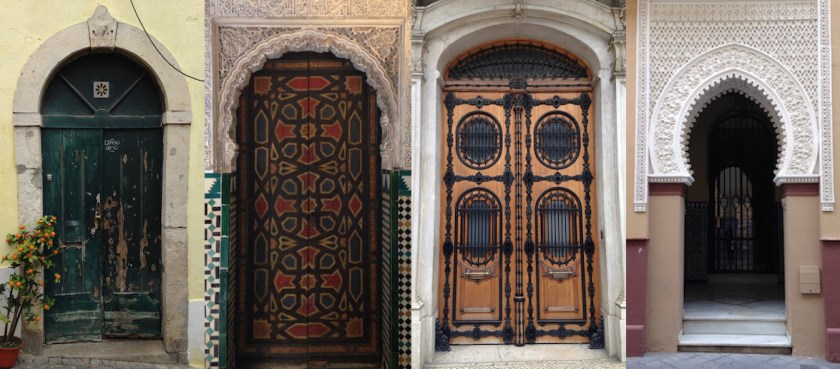
In the world of website architecture, we are now beginning to utilize what the ancient architects and designers knew 600+ years ago. Front, back or side door, whether seen by billions or seen by one; in the design, in the functionality, in the experience — make it more than just a doorway.

Make it the invitation to your story.


The excerpt and photo above are from a blog I wrote called “Not just a doorway” about the Information Architecture and UX design process for Elliance’s Aha! blog. You can find other pieces I wrote for the Aha! blog below.

Selected Posts:

February 9, 2018 – How data analytics informs marketing campaigns

March 15, 2017 – That’s another story…

January 23, 2017 – More than a single story – A look into the Elliance Discovery Process

August 15, 2016 – Reaching for reach

May 23, 2016 – Not just a doorway

A Look Into Blogs

Blogging, Storytelling
Elevating William Woods University’s top programs

In addition to With A Flourish, I was also responsible for writing bi-weekly posts for three other William Woods University blogs: Look Into Education, highlighting the university’s education programs, Look Into ASL, highlighting their American Sign Language programs, and Look Into Equestrian Studies, highlighting all equestrian programs at William Woods University.

The challenge with these blogs was not only coming up with engaging content to draw the attention of both current and prospective students, but to view each post through an SEO lens and infusing the copy with optimized keywords to secure page-one Google rankings. In addition to writing and optimizing blog posts, I was responsible for promoting each blog post on Twitter, Facebook, and LinkedIn.

You can find a few of my favorite posts featured below:

Selected Posts:

Education

July 26, 2017 – Addressing the homeless student crisis part 2: Action

July 24, 2017 – Addressing the homeless student crisis part 1: Awareness

July 19, 2017 – Lightening the principal’s load: creating more opportunity for improved curriculum

June 16, 2017 – Education students investigate the practice of learning through making

April 12, 2017 – Teaching students to fall in love with reading

December 28, 2016 – The mental health epidemic in schools, part 1: An education leader’s role

August 23, 2016 – Heroes in low-income schools: Part 2

August 16, 2016 – Heroes in low-income schools: Part 1

July 26, 2016 – The prevalence of bullying in schools and how bachelors of education students can make a difference

March 17, 2016 – Becoming part of a greater community; the importance of a socially inclusive school

American Sign Language

August 10, 2018 – Bachelors in ASL students draw inspiration for reducing the Deaf unemployment rate

May 16, 2018 – Creative paths for Deaf, hard of hearing, and ASL interpreting majors: Deaf-led theatre

February 14, 2018 – How Certified Deaf Interpreters (CDIs) Help in ASL Interpretation

June 22, 2016 – Uber partners with Deaf organization to create more jobs for the Deaf community

December 10, 2015 – The beautiful symphony of music and sign language

Equestrian Studies

August 13, 2018 – Equestrian Career Spotlight: Equine-Assisted Therapy

May 11, 2018 – Off-horse fitness tips every equestrian major should know

With a Flourish

Blogging, Storytelling
An undergraduate blog for William Woods University

This is a current blog for undergraduate students of William Woods University in Fulton, Missouri. Each month, I conducted research and interviewed faculty, students and alumni to produce 8-10 blogs that highlighted the undergraduate student experience at William Woods in the following areas of study: Communication, Biology, Pre-Veterinary, Sport Management/Athletic Training and Fine Arts.

The goal of this blog is to drive engagement with current and prospective students.

I was responsible for seeing these blogs through from start to finish — conducting preliminary research, creating an editorial calendar, hosting interviews with subject experts, writing and publishing blog posts and creating social posts for Facebook, Twitter and LinkedIn to extend blog reach. Blog content ranges from career spotlights to industry news, trending topics, faculty/alumni/student spotlights, current research in the field and beyond.

Selected posts:

March 26, 2018 – Bachelors in biology students learn the biological effects of stress on the body

March 19, 2018 – Opportunities and challenges of sports marketing

January 31, 2018 – Approaching tough, ethical issues through your sport management degree

November 15, 2017 – The ocean is changing: What are biologists doing to help?

November 10, 2017 – The most dangerous natural phenomenon: What you need to know

August 19, 2016 – The irreplaceable role of social media in nonprofit communications

June 24, 2016 – Art through service, taught by William Woods’s award-winning professor, Terry Martin

June 21, 2017 – Veterinary specialty spotlight: Aquatic Veterinarian

May 10, 2017 – Pre-vet student spotlight: Alicia VanMatre

May 1, 2017 – The importance of good communication skills for pre-vet students

March 24, 2016 – Fine Arts students discover the connection between art and social justice

March 3, 2016 – Bachelors in communications students learn the art of “finding your story”

February 4, 2016 – A call for artists in upcoming Equality Matters art exhibit